
Leopud (Leopard) Latte Mug




Leopud (Leopard) Latte Mug
$13,50
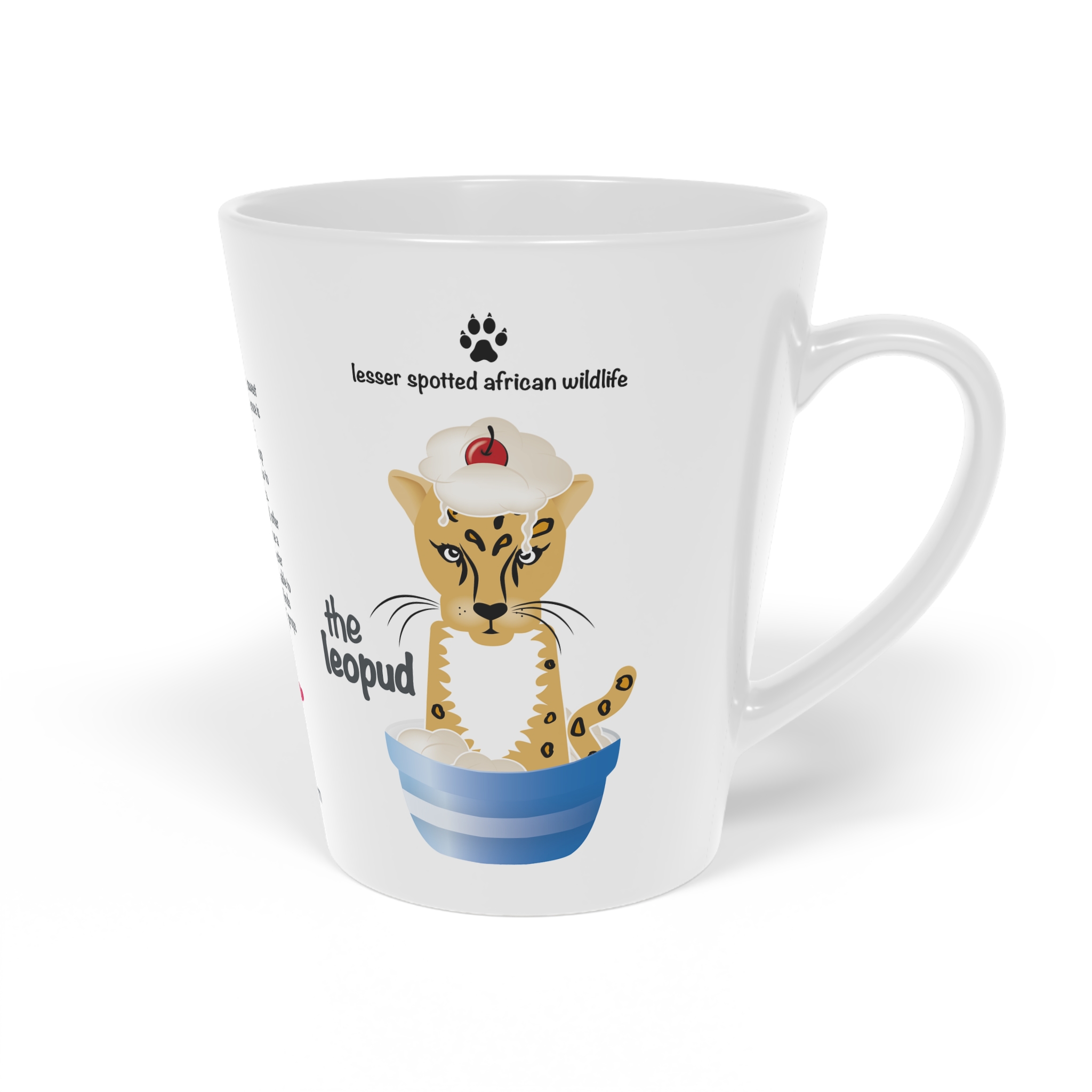
While the Leopud is really just a sweet little kitty cat at heart, his patience is sometimes sorely tested.
Read more about his trials and tribulations in the description below ..
Lesser Spotted African Wildlife Leopud (Leopard) Latte Mug
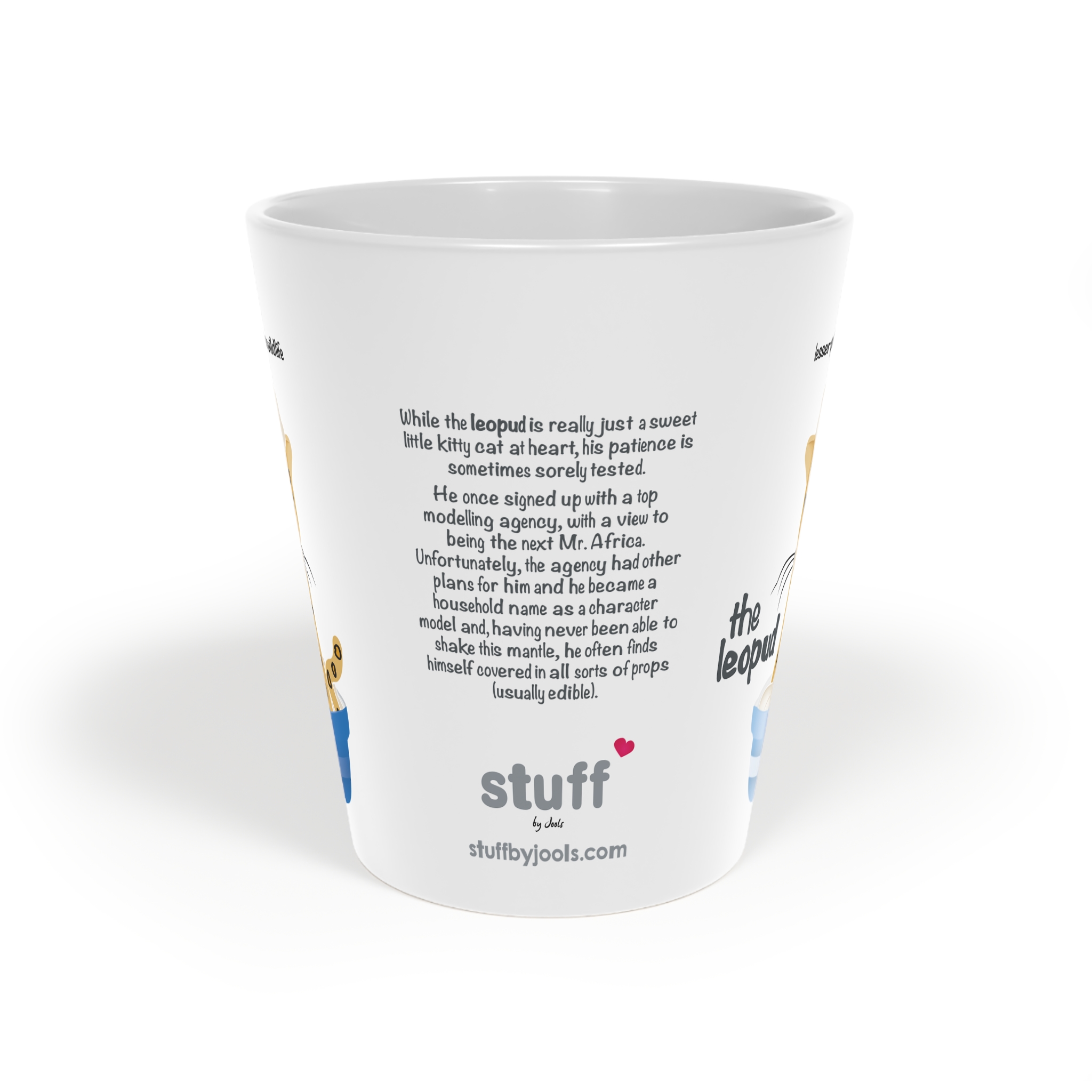
While the Leopud is really just a sweet little kitty cat at heart, his patience is sometimes sorely tested.
He once signed up with a top modelling agency, with a view to being the next Mr. Africa. Unfortunately, the agency had other plans for him.
The Leopud, instead, became a household name as a character model and, has never been able to shake this mantle, so he often finds himself covered in all sorts of props (usually edible).

About our Lesser Spotted African Wildlife mugs:
This is what you get with your Leopud (Leopard) Latte Mug, you lucky person, you!:
- ○ 12oz (350ml) Lesser Spotted African Wildlife mug
- ○ Premium grade 100% white ceramics with scratch-resistant finish
- ○ C-Handle
- ○ Dishwasher- and handwash-friendly
- ○ Microwave-safe
| 12oz (350ml) | |
|---|---|
| Height, cm | 10.00 |
| Diameter, cm | 9.10 |
| Diameter (with handle), cm | 11.50 |
| Height, in | 3.94 |
| Diameter, in | 3.58 |
| Diameter (with handle), in | 4.53 |
*Please don’t scrub hard with bleach and a scourer, even if you’re a die-hard germaphobe (true story) – treat your Leopud latte mug gently and it’ll give you years of pleasure and amusement.
All About Leopards:
The most elusive, solitary and widespread of Africa’s large cats, the African leopard (Panthera pardus) is a master of camouflage and is able to live in close proximity to humans and remain completely undetected.
Leopards are extremely adaptable and can be found in almost any habitat (except the driest centres of sandy deserts). If you’re lucky, you’ll spot them in the Kruger or Sabi Sands, where they thrive, as well as in other wildlife reserves.
Some wild ones still roam outside protected parks, including the Cape Fold Mountains, which stretch from the Cedarberg to PE, and Limpopo and KwaZulu-Natal
Key Traits:
Size and appearance: They’re built for power and climbing. Adult males weigh 60 to 90kg and females, 35 to 50kg. They’re not so tall (70cm at shoulder height). The rosette patterns in their fur provide perfect camouflage.
Best known for: Never changing their spots, though why they would even think of doing that, I’m not sure. And skulking. You could be merrily ambling through a thicket and, unbeknownst to you, there could be a leopard chilling on a branch over your head, swishing his tail. If you’ve seen Disney’s Tarzan, you know a swishing tail is a sign of imminent danger.
Lifespan: They typically live for 12 to 15 years in the wild and up to 20 in captivity.
Social Structure: They’re territorial and solitary and usually live alone, except for mating or with young cubs.
Their Diet: They’re opportunistic predators and eat everything from dung beetles and birds to impala, bushbuck and even young zebras. Rather an eclectic diet, then .. To protect their kill from lions and hyenas, they drag the carcasses (sometimes weighing more than their own body weight) up into trees.
Breeding: Females gestate for about three months and each litter produces two to three cubs, whose mums hide them in sense thickets or caves or anywhere safe for a few months.
Spoor Description: Their tracks are smaller and more rounded than a lion’s, with a three-lobed heel pad and four toe pads. My pic shows the spoor of one who was jumping or climbing, as their claws are retractable and can’t usually be seen, except in those circumstances.

Collect the full set of 12 Lesser Spotted African Wildlife latte mugs and give your family and friends an inspirational topic for filling awkward silences.
Our Leopud (Leopard) Latte Mugs also make unique gifts for wildlife lovers and expats – for birthdays, Christmas and any other occasion or just because..
Product safety information:
EU representative: Stuff by Jools, stuff@stuffbyjools.com, Claremont, Cape Town, WC, 7708, ZA
Product information: Generic brand, two year warranty in the EU and Northern Ireland
Care instructions: Clean in dishwasher or wash by hand with warm water and dish soap
| Weight | N/A |
|---|---|
| Dimensions | N/A |
Brand
Lesser Spotted African Wildlife

You must be logged in to post a review.





Reviews
There are no reviews yet.